
By Eryk Michael Smith/Staff
KAOHSIUNG — Facing continued public concern over traffic safety, the Kaohsiung City Government is pushing back on “worst in Taiwan” headlines. The city government emphasized that the internationally recognized indicator for measuring urban road safety is the number of deaths per 100,000 people, which more fairly considers the impact of population and land area. Kaohsiung has a vast land area, roughly equivalent to “one New Taipei City plus three Taipei Cities,” and the usage rate of motorcycles and large vehicles is extremely high.
According to city government figures from a press release on April 16, the number of people who died within 30 days of a traffic crash, a measure known in Taiwan as A30, has actually fallen for several years in a row.
Officials stated that in 2025, Kaohsiung recorded 307 A30 deaths, a decrease of 44 from 2019, representing a 12.5% drop. The city also said its A1 death toll, which counts people killed at the scene or within 24 hours, depending on official classification, fell from 200 to 146 over the same period.
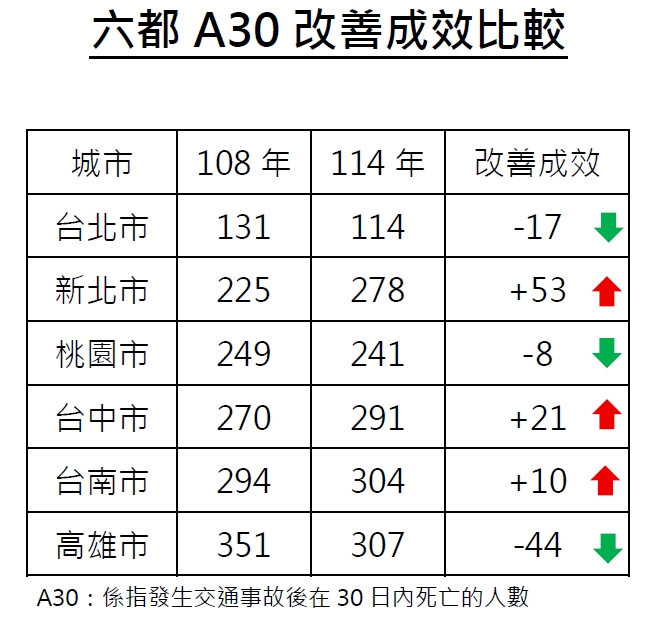
The city argued that the more meaningful comparison is not based solely on raw totals, but on deaths per 100,000 people, which adjusts for differences in population and geography. By that measure, the government said Kaohsiung recorded 11.2 deaths per 100,000 residents in 2025, ranking eighth lowest nationwide. Officials also contrasted Kaohsiung’s reported decline with increases they said were seen in other major cities over the same period, including New Taipei, Taichung, and Tainan.
The statement frames those changes as evidence that road engineering upgrades, more targeted enforcement, and broader transportation policies are having an effect. But the figures cited are the city government’s own, and officials are using them to argue not that the problem has been solved, but that progress should be judged by long-term improvement rather than by raw comparisons alone.
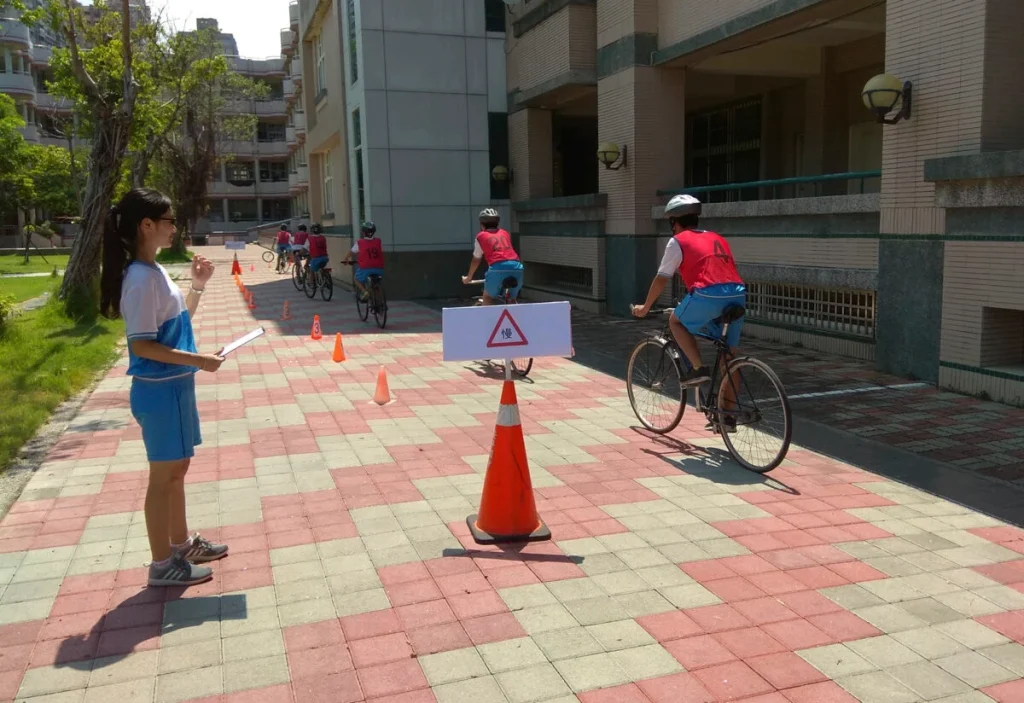
City officials said traffic safety work remains ongoing and called for public cooperation, saying the government will continue pursuing its “4-E” strategy for improvement: Engineering, Education, Enforcement, and Encouraging public transportation.